Skip to content

About our four-legged family

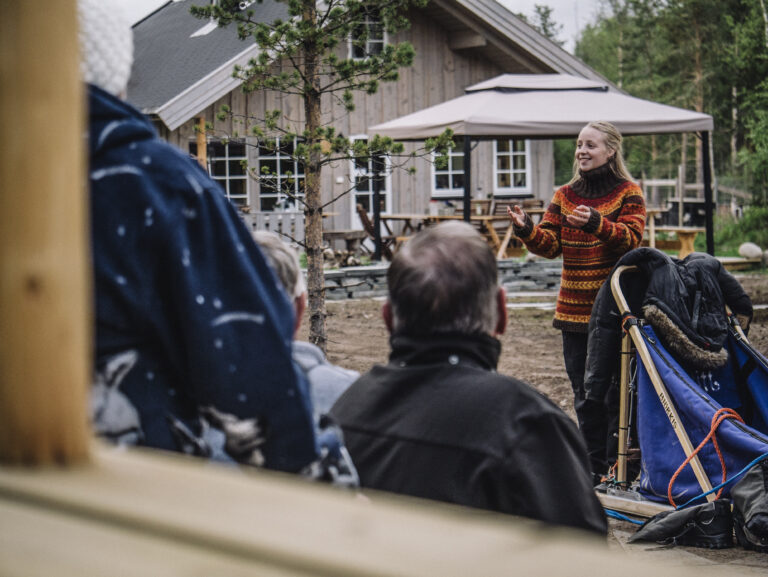
With us, the dogs are the true heroes and athletes. There are no compromises when working with animals. In addition to taking our guests out on trips, we train our dogs for long-distance races. Guests who visit us should always meet dogs that are happy, content and well trained. We want to share our respect, humility and love for the dogs and the nature experiences with you.

Trine Lyrek

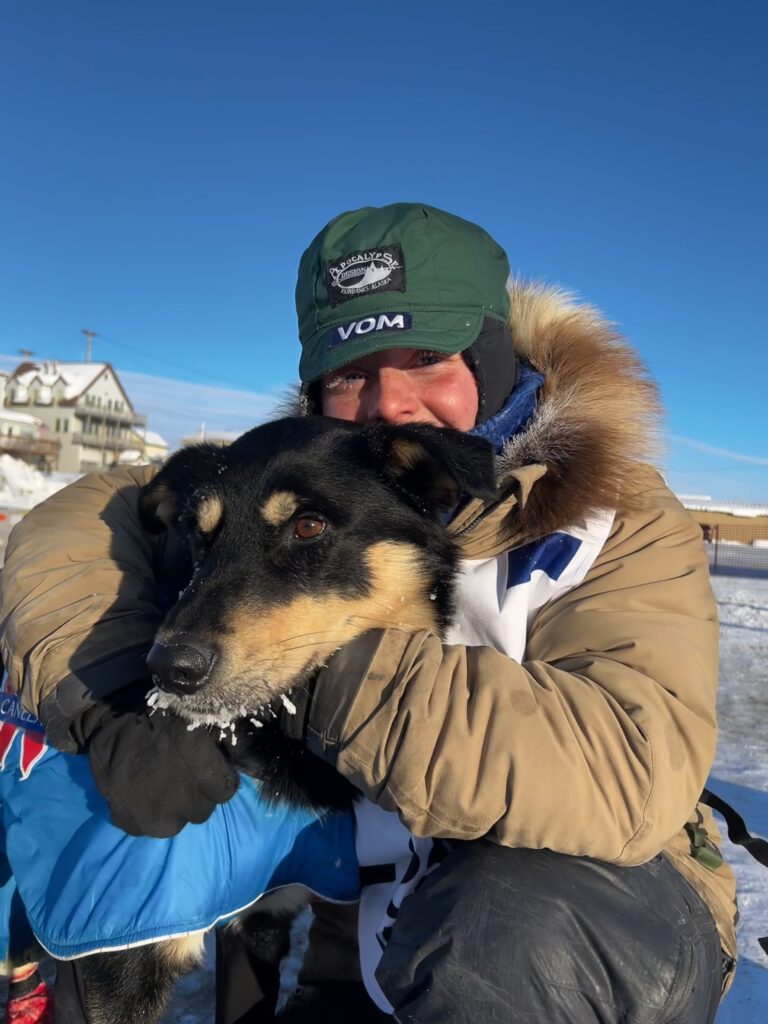
Trine is a qualified lead educator from the University College of Finnmark and has over X years of experience as a musher. She has completed the Finnmarksløpet several times, as well as the Iditarod, the world’s longest sled dog race.

Through many years out on the plateau she has gained experience in Arctic outdoor life, long distances, and the cooperation between humans and dogs.

Trine is known for her deep connection to nature and for the way she, together with her family, has built up Trasti & Trine. What began as a kennel and a desire to live closer to nature has, over the years, developed into a place known for warm encounters, genuine experiences and a personal atmosphere.

For us it's not about hurry or large tourist crowds, but about tranquility, closeness and the simple outdoor life.

The year follows nature's rhythm, from dark winter mornings under the Northern Lights to bright summer nights in the kennel. Through her work, Trine has become an important communicator of Arctic outdoor life and an inspiring figure in Norwegian mushing.

an opinion about Trine/quote

Trine Lyrek

Trine is a qualified lead educator from the University College of Finnmark and has over X years of experience as a musher. She has completed the Finnmarksløpet several times, as well as the Iditarod, the world’s longest sled dog race.

Through many years out on the plateau she has gained experience in Arctic outdoor life, long distances, and the cooperation between humans and dogs.

Trine is known for her deep connection to nature and for the way she, together with her family, has built up Trasti & Trine. What began as a kennel and a desire to live closer to nature has, over the years, developed into a place known for warm encounters, genuine experiences and a personal atmosphere.

For us it's not about hurry or large tourist crowds, but about tranquility, closeness and the simple outdoor life.

The year follows nature's rhythm, from dark winter mornings under the Northern Lights to bright summer nights in the kennel. Through her work, Trine has become an important communicator of Arctic outdoor life and an inspiring figure in Norwegian mushing.

an opinion about Trine/quote

She gained recognition as early as 15 after a dramatic storm during the Femundløpet where she dug shelter in the snow with the dogs and made it through the night.


Hanna Lyrek

Hanna grew up surrounded by snow, forest and long winters here in Alta, where mushing early became a natural part of everyday life. With strong roots in the long-distance community, she learned from a young age what is required to travel in Arctic nature through all seasons.

Already as a teenager she made her mark in the sport, and at 19 she made history by winning the Finnmarksløpet as the youngest winner ever. Later she competed in the Iditarod in Alaska, where she received the awards “Rookie of the Year” and “Most Improved Musher.” She is known for her calm presence, strong endurance and the close cooperation with her team under demanding conditions.

The days follow the rhythm of the seasons, with training, outdoor life and work outside from dark winter days under the Northern Lights to bright summer nights in the kennel.

Over the years Hanna has become an inspiring profile within Nordic mushing, not only for her results but for the way she communicates Arctic outdoor life. Genuine, down-to-earth and close to nature.

Hanna Lyrek

Hanna grew up surrounded by snow, forest and long winters here in Alta, where mushing early became a natural part of everyday life. With strong roots in the long-distance community, she learned from a young age what is required to travel in Arctic nature through all seasons.

Already as a teenager she made her mark in the sport, and at 19 she made history by winning the Finnmarksløpet as the youngest winner ever. Later she competed in the Iditarod in Alaska, where she received the awards “Rookie of the Year” and “Most Improved Musher.” She is known for her calm presence, strong endurance and the close cooperation with her team under demanding conditions.

The days follow the rhythm of the seasons, with training, outdoor life and work outside from dark winter days under the Northern Lights to bright summer nights in the kennel.

Over the years Hanna has become an inspiring profile within Nordic mushing, not only for her results but for the way she communicates Arctic outdoor life. Genuine, down-to-earth and close to nature.

She gained recognition as early as 15 after a dramatic storm during the Femundløpet where she dug shelter in the snow with the dogs and made it through the night.


Life in the kennel

About 70 dogs live with us, all Alaskan huskies. They are divided between two kennels, each dog having its own space and its own house with a name sign. Living and working closely with so many animals is a privilege and a great responsibility. Our kennel is clean and tidy, the dogs are well cared for and we who work in the kennel know what we are doing. In addition to taking guests out on trips with the dogs, we are also a racing kennel competing among Norway’s top long-distance mushers. Every year we have one or more teams that participate in the country's longest races – Finnmarksløpet, Bergebyløpet and Femundløpet.

And if there's one thing the dogs look forward to when we have guests, it's all the cuddles and attention that come with it. Accompanied by a member of our team you are always welcome into the kennel and can greet any dogs you like. In the summer we also have puppies, little rascals who rarely say no to cuddles and play.
Power, endurance and tradition

From working dog to modern sled dog sport. Alaskan huskies are not a pure breed, but a type of sled dog that has developed over many generations of targeted breeding for one thing: to be a strong, enduring and fast working dog in a team. The origin lies in North America, where Indigenous peoples and later polar and gold-rush expeditions bred dogs that could pull sleds over long distances in demanding climates.

Over time the Alaskan husky has become the workhorse of modern sled dog sport. It is known for its endurance, willingness to work and ability to adapt to varied conditions, whether deep snow, long distances or high speeds at competition level.

Sled dog driving also has deep roots in northern regions, where dogs for centuries have been an important part of transport, hunting and livelihood. Today traditions live on both as cultural heritage and as a modern activity, where humans and dogs together experience nature in a way that is tranquil, powerful and intimate.

The sled dog's history

In Alaska sled dogs became especially important during the Gold Rush at the end of the 19th century, when they were the only reliable way to transport people and goods over long distances in snow and ice.


Power, endurance and tradition

From working dog to modern sled dog sport. Alaskan huskies are not a pure breed, but a type of sled dog that has developed over many generations of targeted breeding for one thing: to be a strong, enduring and fast working dog in a team. The origin lies in North America, where Indigenous peoples and later polar and gold-rush expeditions bred dogs that could pull sleds over long distances in demanding climates.

Over time the Alaskan husky has become the workhorse of modern sled dog sport. It is known for its endurance, willingness to work and ability to adapt to varied conditions, whether deep snow, long distances or high speeds at competition level.

Sled dog driving also has deep roots in northern regions, where dogs for centuries have been an important part of transport, hunting and livelihood. Today traditions live on both as cultural heritage and as a modern activity, where humans and dogs together experience nature in a way that is tranquil, powerful and intimate.

The sled dog's history

In Alaska sled dogs became especially important during the Gold Rush at the end of the 19th century, when they were the only reliable way to transport people and goods over long distances in snow and ice.


Teamwork and competitive dog mushing

Hanna's article

A taste of dog sledding

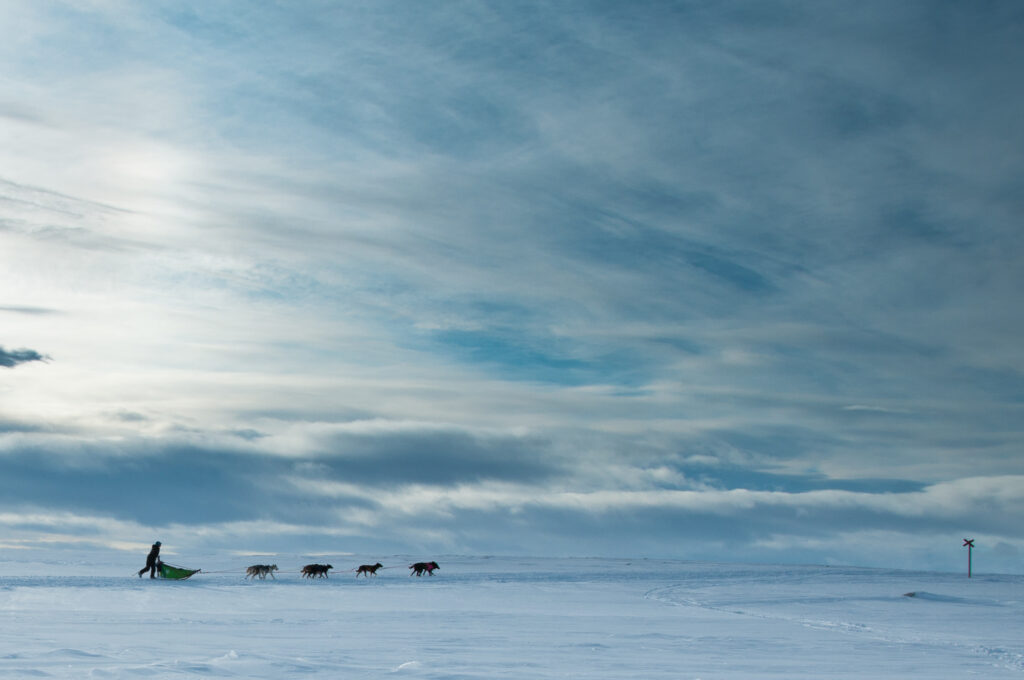
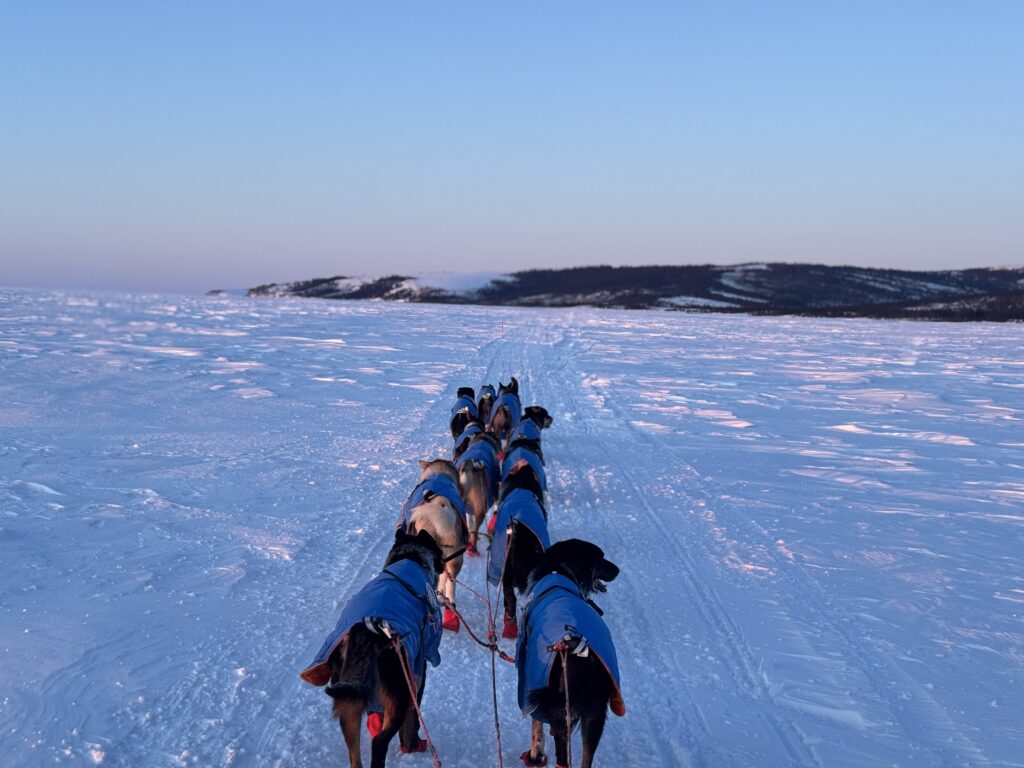
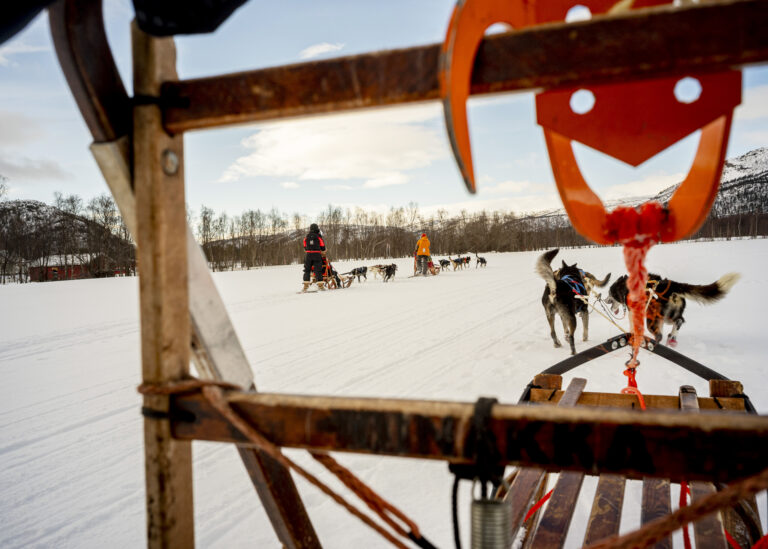
The sound of eager, expectant dogs fills the air. They stand ready in front of the sleds, waiting only to get going. Maybe you feel that tingle of excitement and anticipation yourself. The gate opens. The dogs lunge forward. Then it becomes silent. Wonderfully quiet. The sound of paws and sled runners is the only thing that breaks the stillness. Are you ready to try dog sledding?

Respect for a changing Arctic

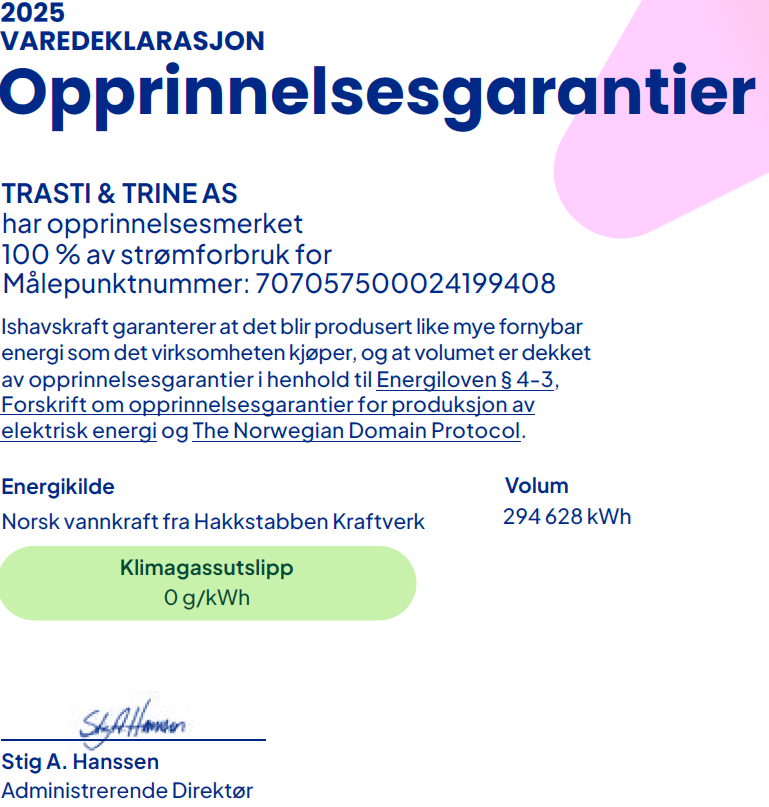
Resilience is about taking responsibility even when the solutions are not the easiest. That's why Trasti & Trine have chosen a plant-specific guarantee of origin from the Hakkstabben hydropower plant in Finnmark through Ishavskraft. It gives us documented local renewable power, and is a concrete choice for the nature we live in, with, and depend on.