Skip to content

Quality Built by Hand

At Trasti & Trine, quality and attention to detail begin long before the guests arrive. They start with the materials, the raw ingredients, the preparations and the people who put work into what often goes unseen. For us, craftsmanship is the cornerstone of the whole. It's not details that shout, but that carry. We have worked carefully and built solidly so that the result reads as creative and alive.

Craftsmanship as Practice

For us, craftsmanship is not so much a style as it is the way we work. In the kitchen it means knowing the ingredients, understanding the seasons and respecting the processes that give flavour and depth. It means working with what is available, not what is always on hand.

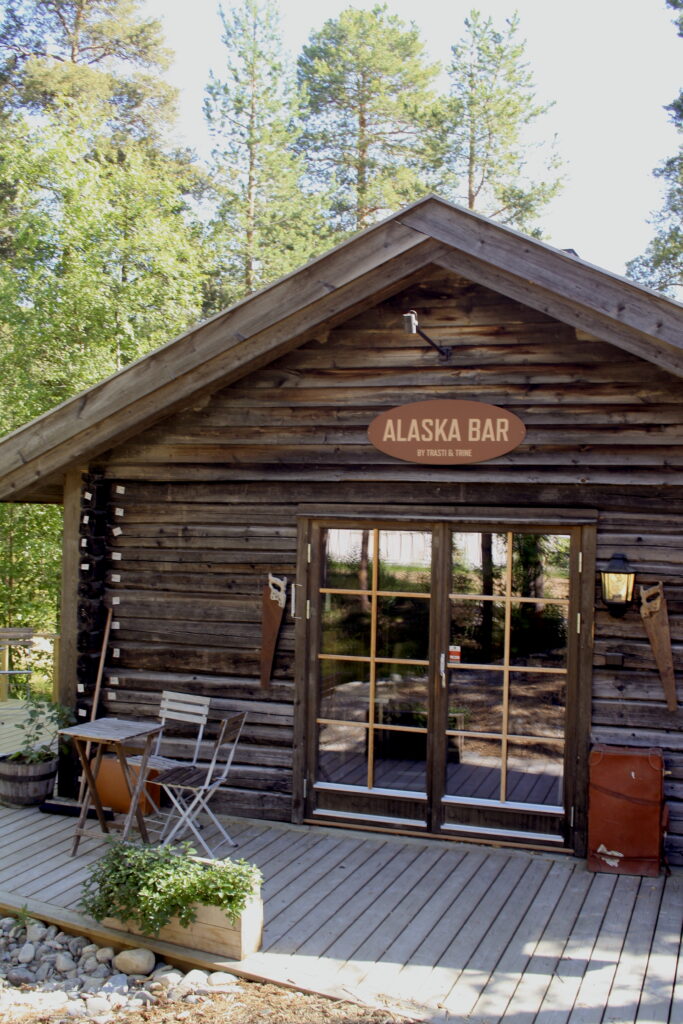
In a time when more and more is being automated, standardized and optimized, we want to preserve respect for craftsmanship. Whether it's in the restaurant, the kennel, or in our buildings — many of which have largely been built by us.

For us, craftsmanship is about far more than technical skills. It's about the relationship between people and their work. About the pride in doing something properly. About the understanding that quality rarely arises from shortcuts, but from experience, patience and the willingness to learn over time.

Not only in a physical sense, but as an undertaking. Every meal, every kennel, every guest experience and every building bears traces of people who have invested time, knowledge and care into what they do. Therefore we do not see craftsmanship as a department or a discipline. We see it as a way of approaching the world.

«Trasti & Trine has been built by hand, stone by stone, since the beginning» Trine Lyrek

Craftsmanship as Practice

For us, craftsmanship is not so much a style as it is the way we work. In the kitchen it means knowing the ingredients, understanding the seasons and respecting the processes that give flavour and depth. It means working with what is available, not what is always on hand.

In a time when more and more is being automated, standardized and optimized, we want to preserve respect for craftsmanship. Whether it's in the restaurant, the kennel, or in our buildings — many of which have largely been built by us.

For us, craftsmanship is about far more than technical skills. It's about the relationship between people and their work. About the pride in doing something properly. About the understanding that quality rarely arises from shortcuts, but from experience, patience and the willingness to learn over time.

Not only in a physical sense, but as an undertaking. Every meal, every kennel, every guest experience and every building bears traces of people who have invested time, knowledge and care into what they do. Therefore we do not see craftsmanship as a department or a discipline. We see it as a way of approaching the world.

«Trasti & Trine has been built by hand, stone by stone, since the beginning» Trine Lyrek

Good work takes time

Time as a Quality Requirement

We set aside time to fail, prioritize correcting mistakes so we can continue to learn. It is an ongoing search for solutions that withstand the test of time, rather than quick results. We were not built quickly; we were built to last.

Robust, Creative and Living Craftsmanship

Craftsmanship exists in the kitchen when an ingredient is treated with respect for its origin. It exists in the kennel when experience and observation form the basis for good animal welfare. It exists in our hospitality when people feel welcome without it feeling rehearsed. And it exists in the stories shared around the table, when knowledge is passed on from person to person.

Craftsmanship requires robustness, because quality is built over time and must withstand repetition, pressure and the moments when no one is watching. It demands creativity, because no seasons, guests or challenges are exactly the same, and the best solutions often arise in the meeting between experience, curiosity and practical wisdom. And it must be living, because craftsmanship is never finished. It develops through people, experiences and new generations who add their own understanding.

Therefore it's important for us to pass on craftsmanship, not only through training but through sharing. Through apprentices, young staff, partners and everyone who wants to learn more about food, nature, hospitality or life in the north. For every craft that disappears, a way of understanding the world disappears with it. For every piece of knowledge that is passed on, the community around us is strengthened.

Through Forkprint we want to highlight craftsmanship as a value in itself. Not because everything old is necessarily better, but because some things deserve time, presence and hands that know what they are doing. For us, craftsmanship is not just a method. It is part of our identity. This is how Trasti & Trine was built, and it is how we wish to continue developing the place.

Robust, Creative and Living Craftsmanship

Craftsmanship exists in the kitchen when an ingredient is treated with respect for its origin. It exists in the kennel when experience and observation form the basis for good animal welfare. It exists in our hospitality when people feel welcome without it feeling rehearsed. And it exists in the stories shared around the table, when knowledge is passed on from person to person.

Craftsmanship requires robustness, because quality is built over time and must withstand repetition, pressure and the moments when no one is watching. It demands creativity, because no seasons, guests or challenges are exactly the same, and the best solutions often arise in the meeting between experience, curiosity and practical wisdom. And it must be living, because craftsmanship is never finished. It develops through people, experiences and new generations who add their own understanding.

Therefore it's important for us to pass on craftsmanship, not only through training but through sharing. Through apprentices, young staff, partners and everyone who wants to learn more about food, nature, hospitality or life in the north. For every craft that disappears, a way of understanding the world disappears with it. For every piece of knowledge that is passed on, the community around us is strengthened.

Through Forkprint we want to highlight craftsmanship as a value in itself. Not because everything old is necessarily better, but because some things deserve time, presence and hands that know what they are doing. For us, craftsmanship is not just a method. It is part of our identity. This is how Trasti & Trine was built, and it is how we wish to continue developing the place.